The Evidence Recovery Team (ESAR)
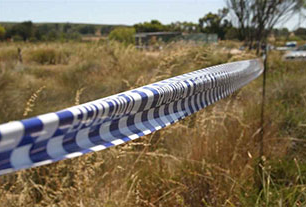
ESAR stands for Evidence Search and Recovery or better known as Grid searching. A Grid search (or Type 3 search) is what usually comes to mind when the public thinks of a lost person search. They picture a long line of people marching like soldiers across an open field. Because of the manpower involved, this is usually the search method of last resort. However these types of searches have the highest Probability of Detection in evidence searches that can run up to 95% recovery rates.
Law enforcement avoids these types of searches because of the expense involved. For example, assume you need 25 people to search one square mile. Now, you have to decide on spacing. If you space out the searchers with 20 feet between them, this "line" will need to make eleven parallel passes through the area to cover it all and will take a total of 37 hours! That’s 924 MAN HOURS and 37 actual search hours which at an overtime rate of 30/hr would cost a Sheriffs budget $27,720.00, which is a great deal of overtime payroll for some Sheriff’s Departments. Volunteer search teams like PRSAR cost nothing and have NO impact to the requesting agencies budgets. Also the use volunteer untrained searchers will greatly lower the Probability of Detection.
In order to help fill this gap the Peace River K9 Search & Rescue started a specialized team known as the ESAR. The PRSAR ESAR Team has trained grid searchers that have been taught to move slowly and deliberately through an area in a straight line maintaining the integrity of the search line for High POD. They are trained in multiple grid search strategies and practice on a regular basis. All members have NASAR SARTEC certification. This team responds at no cost to the requesting agency.
Law enforcement avoids these types of searches because of the expense involved. For example, assume you need 25 people to search one square mile. Now, you have to decide on spacing. If you space out the searchers with 20 feet between them, this "line" will need to make eleven parallel passes through the area to cover it all and will take a total of 37 hours! That’s 924 MAN HOURS and 37 actual search hours which at an overtime rate of 30/hr would cost a Sheriffs budget $27,720.00, which is a great deal of overtime payroll for some Sheriff’s Departments. Volunteer search teams like PRSAR cost nothing and have NO impact to the requesting agencies budgets. Also the use volunteer untrained searchers will greatly lower the Probability of Detection.
In order to help fill this gap the Peace River K9 Search & Rescue started a specialized team known as the ESAR. The PRSAR ESAR Team has trained grid searchers that have been taught to move slowly and deliberately through an area in a straight line maintaining the integrity of the search line for High POD. They are trained in multiple grid search strategies and practice on a regular basis. All members have NASAR SARTEC certification. This team responds at no cost to the requesting agency.